Tag Archives: Food Addiction

This is Why You Are Over Eating Part 1 (Written)

First off, I want to say that this is not a blog vindicating the calorie myth. That said, the truth is we in western culture simply consume too much food. This over consumption is resulting in weight gain. It is awesome to be on a low-carb diet and not have to starve in order to lose weight. However, this does not mean that every meal should be a carb-free version of thanks giving.

What I want to talk about over the next two blog posts is why we overeat. In this blog, I will talk about one of the major reasons. What is that reason? Simply put, we let other things other than our stomach regulate when we are done eating.

So if we are not letting our stomach regulate our consumption of food, then what do we let regulate it?

What’s Left on The Plate 

Often we let the plate tell us whether or not we are finished eating. Or to put it another way, when our plate is empty, we are done eating.

Paul McKenna has done experiments where he takes people out to breakfast. At breakfast he lets them order what ever they want and eat as much as they want. Most of the time the participants finish their plates. Then he takes the same subjects out on a different day and has them repeat the experience with one major edition–he blindfolds them.

The result is that most of the subjects only finish half of their food. Why? They are forced to listen to their stomach instead of their eyes in order to determine if they are full. The lesson here is to consciously check in with your stomach to see if you are actually full. If you are, stop eating.

Eating Too Fast 

Another way we do not listen to our stomach is that we eat too fast. To my shame, I have gone to an all you can eat buffet and finished two plates in under 10 min. While I was working on my third plate, I discovered that I was not only that I was full but stuffed.

It takes a while for satiety signal from our food to set it. If we eat too fast we can over ride this signal.

Eating At Meal Times 

There is also eating because it is meal time. That is to say we do not eat because we are hungry but we eat because it is “time” to eat. Most often this happens in the morning or at lunch.

In the morning, we are told that we should eat because we are suppose to eat breakfast even if we are not hungry. And personally speaking,  I am not that hungry in the morning.

Then there is lunch. We are at work and the lunch break begins and we are suppose to eat even if we are not hungry. I cannot tell you how many times I have eaten lunch because it was “lunch time” even though I really did not want to eat.

Even though this happens mostly at breakfast and lunch, dinner can play into this too. If you have had a late or a substantial lunch, you may not be hungry at dinner time. But we eat anyway because it’s dinner time.

But why do we do this? There is no law that says you have to eat at meal times. You should eat when you are hungry and stop when you are full.

Other Distractions 

Finally, there are other distractions. People can be distracted by conversation, TV, Internet, children…. Before you know it you are eating more than you should.

There is nothing inherently wrong with doing these things while you eat. However, check in with yourself to find out whether or not you are full. You may be surprised to find out that you are no longer hungry sooner than you think.

Final Thoughts

In closing, the only thing that should really dictate whether or not you should eat is your stomach. If truly listen to your stomach and eat only when you are hungry and stop when you full you will find that you will eat much less.

What to Expect When Carb-Cycling With Dirty Carbs

A new episode of A Mind For Fitness Podcast is now available. In this episode, we talk about the seven things you can expect when you use dirty carbs for your cheat meal. Also, what makes a carb dirty as opposed to clean.

Take Your Gym Bag With You

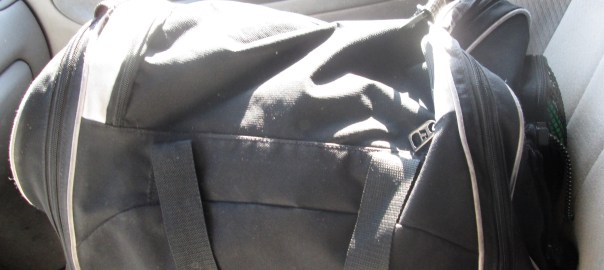
It can be difficult at times to stay dedicated to your workout plan. There are many things that can get in the way. However, here is one thing you can do in order to make your commitment to your workout a little easier–take your gym bag with you.

Now, I understand that many people who are dedicated to working out do so at home or in the morning. This will not apply to you.

However, if you are one of those people who go to the gym after work, this will help. Why? You can imagine why for yourself. You leave work with every intention of going home, changing, and going to the gym. But when you get home personal business gets in the way. The phone rings, you need to pick up something for dinner…. The list could go on. Or you get home and you want to sit down for just a second and once you do you realize that you are too tired to make it to the gym.

Has this happened to you? My post-work workout has been derailed more than I’d like to admit because of things like this. The way to avoid this is by simply bringing your gym bag with you. You will avoid going home and getting tangled up in everyday life.

Of course I’m not saying that bringing you gym bag with you will magically solve all the obstacles that could get in the way of your post-work gym session, but it is one easy thing you can do in order to stack the deck in your favor. So, if you are going to go to the gym after work, take your gym bag with you!

Intermittent Fasting Wars PT. 4

This is the final installment in this short series of articles on intermittent fasting (IF). In this article, I will explain what IF protocol I used and why. Also, I will give you some tips on choosing an intermittent fasting protocol for yourself.

Which IF I Used

I chose the Warrior Diet because it was, in my opinion, the easiest to follow.  Why? First off it is a daily plan. I did not have to remember whether this was a day I was eating or not. I just did the same thing every day.

Also, on the Warrior Diet I got to eat every day which made it easier to stick to my low-carb lifestyle. This did not always happen as I will explain later, but being able to eat every day made low-carb a more viable option. On the other hand, when I experimented with alternate day fasting and Eat Stop Eat one of the biggest problems I had with these diets is that after 24 hours of fasting, I wanted to eat everything in sight. On these diets you are allowed to eat normally which I have described in previous posts. But after a 24 hour fast I wanted to eat like it was Thanksgiving.

Like I said above, I did not always eat low-carb when I was on the Warrior Diet. And the truth is that you do not have to. But I did eat low-carb most of the time. However, the ability to eat whatever I wanted during my eating window allowed me to be more flexible while eating with my friends and family.

Which IF Plan Should You Do? 

First off, do not be afraid to experiment.  And do not be afraid to switch to another plan if one is not working out. But you must be able to chose a plan that you will stick to and that will fit into your life. If you live alone and do not mind skipping a day of eating, you might do better on alternate day fasting or Eat Stop Eat. If you have a family and you eat with them every night, you might do better on the Warrior Diet. Just remember the best plan is the one you will actually do.

Final Observation

One more thing I noticed about IF that I wanted to mention has to do with the fact that a lot of these plans allow you to have carbs during your eating window. However, what I noticed is that the the longer your eating window is the more low-carb you need to go in order to see results. For example, if you are going to break your fast between 14-18 hours and give yourself a longer eating window, you need to really be cautious of the carbs you are eating. Basically you need to stick to a low-carb diet. On the other hand if you fast for 20 plus hours you have a greater tolerance for carbs. This means that if you only eat for say two hours, you can eat more carbs and still lose weight.

What You Need To Try Before You Give Up (Audio)

A new episode of A Mind For Fitness Podcast is now available. In this episode Ean Carlin talks about why we want to give up on trying to lose weight and what you need to know before you do! Enjoy!

The Intermittent Fasting Wars PT. 1(Written)

I recently did a podcast on different intermittent fasting protocols. In light of that, I thought I would write this blog based on that podcast. I’m doing this because I want to get the information out there and realize that not everyone listens to podcasts. That is to say that some people like to read more than they like to listen.

This will not be a word for word transcript of the podcast (that would just be too lengthy). What I wanted to do was talk about the different kinds of intermittent fasting plans available and which one is right for you. However, before I do that, I wanted to write a little on why I have taken up this topic.

Last October I had a shocking eye opener. Over the course of the summer, I had re-gained about 15 pounds. While I was no where near 300 pounds (the estimated weight I was at when I started to take my health seriously), I was still very depressed to have gained that amount of weight back.

How did I re-gain the weight. Well quite honestly it was just though neglect. One too many cheat meals, eating too often, not pushing myself as hard as I could have in the gym…the list goes on. And also, the fact that I was not near my original 300 pounds made it easy to over look the “relatively” small amount of weight I was gaining back.

At the first of the year, I once again got serious about my health. In about 5 weeks, I had lost the 15 pounds plus a few extra. I started giving it my all in the gym, making sure I was counting my carbs. I was also eating clean. But the big factor was tighting down on my intermittent fasting.

But one of the decisions I had to make was choosing an intermittent fasting (IF) protocol. This caused me to study which IF programs were available. So which ones are available, and which one did I choose to lose about 20 pounds? And which one should you choose? These questions will be addressed in our next post.

Why Traditional Diets Work For Some People

In this episode, Ean gives the straight scoop on why low calorie, Low fat diets work for some people some of the time. As well as why it does not work for others and why you should never make it your lifestyle.

Overcoming Your Plateau

In the previous two articles, we talked about why we hit plateaus in the first place. In addition we addressed what not to do when your weight loss stalls out. In this article, we will finally turn our attention to what you actually need to do in order to overcome your plateau.

Change Things Up

If you have stopped burning fat because you are simply not following your diet correctly, then needless to say, you need to follow your workout and eating program more faithfully. However, if you have followed your diet faithfully, and you have stopped losing weight, then the answer to your problem is rather simple: change things up!

Your body has adjusted to what you are doing and as a result you have stopped losing weight. In order to fix this problem, you need to stop your old program and try a different program. There are primarily two arias that you need to change. First is diet and the second is exercise.

Diet

The first thing to change is your diet. This is not difficult to do. For example, if you have been intermittent fasting, then stop. Try eating six small meals a day, or at least switch to three meals a day.

The reverse is true also, if you have been on a diet that requires you to eat all day switch to intermittent fasting for a while.

While I do not recommend a low fat diet for the long run, I do recommend trying it for a short time. Try it for about a week and go back to LCHF. See what happens.

I also feel the same way about veganism. There is no problem in giving up meat for a week. It is another way to shock your system and get you to start burning fat again.

Exercise 

It is true that 70% of your weight loss comes from diet. But 30% comes from exercise. For many out there, they have stopped losing weight because they do not exercise. If you want to start losing weight again, start exercising and see what happens.

There is also a segment of the population who are always exercising. I know it is difficult to do, but you may need to give your body a rest. In other words, stop working out for a while. This may be just what you need.

Finally, you can change the kind of workouts you are doing. In other words. If you are doing a lot of cardio, start lifting weights. If you are lifting weights, start doing more cardio.

Closing Thoughts

It can be discouraging to hit a plateau. However, the suggestions listed above proven strategies to help you start losing weight again. I know because I have seen these things work in many other people, but also I know because I have seen them work in my own life. I have hit many plateaus on my weight loss journey and have overcome every one of them. You can to. Don’t give up!

Five Factors That Will Either Make or Break Your Weight Loss

Another episode of A Mind For Fitness podcast is now available. In this episode I talk about the difference between those who succeed at weight loss and those who fail. Which camp are you in? Listen and find out.

Why We Hit Plateaus In Weight Loss

I recently did a podcast where I addressed the issue of hitting plateaus in weight loss. I talked about why we hit them and what we can do to get past them. This blog post will address the first half of the issue. Namely, why we hit them. In the next post, I will talk about what not to do and why. After that, I will talk about the active things you can do to get past them and get back on the road to burning fat.

Two Main Causes

The truth is there is only two reasons why your weight loss progress stops. The first is you are just not sticking to your diet correctly. The second is your body has simply adjusted to your dietary and/or workout regiment.

Not Sticking To Your Diet

Sometimes your not sticking to your diet simply because you are cheating too often. If this is the case, the truth is you need to do the diet correctly.

However, there are times when you really think you are sticking to your diet, but in reality you are unknowingly are consuming too many carbs and too many processed foods. For example that salad you had for lunch may have had many more carbs than you thought.

On one occasion I was happily eating a salad when I noticed that it was slightly sweeter than I thought it should be. The reason for this is that there were craisins in the salad. When I finally looked up the carb count in craisins, I realized that my salad contained my daily allotment of carbs. I was shocked.

If this kind of thing happens too often, you will certainly stop losing weight.

Body Adjustment 

However, for many, you are sticking to your diet and you have still hit a plateau. The reason for this is that your body has adjusted to your diet and/or workout plan. One thing to keep in mind is that your body is always looking to establish an equal balance within itself. Losing wight is an imbalance within the body. And an imbalance is a shock and perceived as a treat to survival. Even though there are great benefits to losing excess fat, your body is still seeking to establish equilibrium as a survival tool.

Next Post

So there are your two reasons why you will stop losing weight. The next post will deal with what not to do about it.

If you liked this, please share this post on your favorite social media.