Tag Archives: Plateau

The Intermittent Fasting Wars PT. 1(Written)

I recently did a podcast on different intermittent fasting protocols. In light of that, I thought I would write this blog based on that podcast. I’m doing this because I want to get the information out there and realize that not everyone listens to podcasts. That is to say that some people like to read more than they like to listen.

This will not be a word for word transcript of the podcast (that would just be too lengthy). What I wanted to do was talk about the different kinds of intermittent fasting plans available and which one is right for you. However, before I do that, I wanted to write a little on why I have taken up this topic.

Last October I had a shocking eye opener. Over the course of the summer, I had re-gained about 15 pounds. While I was no where near 300 pounds (the estimated weight I was at when I started to take my health seriously), I was still very depressed to have gained that amount of weight back.

How did I re-gain the weight. Well quite honestly it was just though neglect. One too many cheat meals, eating too often, not pushing myself as hard as I could have in the gym…the list goes on. And also, the fact that I was not near my original 300 pounds made it easy to over look the “relatively” small amount of weight I was gaining back.

At the first of the year, I once again got serious about my health. In about 5 weeks, I had lost the 15 pounds plus a few extra. I started giving it my all in the gym, making sure I was counting my carbs. I was also eating clean. But the big factor was tighting down on my intermittent fasting.

But one of the decisions I had to make was choosing an intermittent fasting (IF) protocol. This caused me to study which IF programs were available. So which ones are available, and which one did I choose to lose about 20 pounds? And which one should you choose? These questions will be addressed in our next post.

True Confessions: How I Gained Weight Again (And How I lost It Audio)

A new A Mind For Fitness Podcast is now available. This is a good one. I come clean and talk about how I gained weight again but also how I lost it and am now more fit than ever. Enjoy!

What Not To Do About Your Weight-Loss Plateau

In the previous blog post I talked about why we hit plateaus in our weight loss. In that blog, I talked about the two main causes. The first was not appropriately sticking to your diet. And the second reason simply has to do with the fact that our body likes to adjust to what we are doing. In this post, I want to address what not to do when you stop losing weight.

Two Big Don’ts 

In my experience, I see two major mistakes people make when they hit their plateau. The first is psychological, namely discouragement. The second mistake is attempting is to be supper strict with your diet or workout plan.

Discouragement 

It is easy to get discouraged when you hit a plateau. Particularly when you are doing everything right. But the truth is stalling out in your weight-loss is, as far as I can tell, universal. It does not matter how good the diet is, or how strictly you are following it, at some point it will stop working. And by stop working, I mean that your weight-loss will either slow down or stop altogether. I do not mean that your plan will stop being healthy, rather what I mean is that your body will adjust and you will stop losing weight.

In light of this, there is no reason to get discouraged. Like I mentioned above, stalling out is universal. We all go though it.

Also, discouragement does not help. In fact, It leads to self destructive behavior. Those who stay discouraged for too long eventually fall back into old habits and gain back all the weight that they have lost. This is a story I have seen and heard too many times to recount. Don’t get discouraged. There are things you can do to get off of your plateau.

Super Strict 

If the cause of your plateau is that you have not been following the diet correctly, then being more strict is the answer. However, like I wrote in the last post, even those who do a low-carb, paleo, ketogenic diet correctly, will still stall out. It’s easy to think that you just have not done the diet correctly enough. It’s easy to think that all you need to do is dial it down more on how many carbs you eat. As a result of this kind of thinking I see many people eating nearly no carbs at all. This is a big mistake.

Going supper strict is not the answer to your problems. In fact, you are just setting yourself up to prolong your plateau and more discouragement.

So now we know what not to do. This leads us then to ask: What can I do to re-start my fat-burning hormones? This will be the subject of our next blog.

Why We Hit Plateaus In Weight Loss

I recently did a podcast where I addressed the issue of hitting plateaus in weight loss. I talked about why we hit them and what we can do to get past them. This blog post will address the first half of the issue. Namely, why we hit them. In the next post, I will talk about what not to do and why. After that, I will talk about the active things you can do to get past them and get back on the road to burning fat.

Two Main Causes

The truth is there is only two reasons why your weight loss progress stops. The first is you are just not sticking to your diet correctly. The second is your body has simply adjusted to your dietary and/or workout regiment.

Not Sticking To Your Diet

Sometimes your not sticking to your diet simply because you are cheating too often. If this is the case, the truth is you need to do the diet correctly.

However, there are times when you really think you are sticking to your diet, but in reality you are unknowingly are consuming too many carbs and too many processed foods. For example that salad you had for lunch may have had many more carbs than you thought.

On one occasion I was happily eating a salad when I noticed that it was slightly sweeter than I thought it should be. The reason for this is that there were craisins in the salad. When I finally looked up the carb count in craisins, I realized that my salad contained my daily allotment of carbs. I was shocked.

If this kind of thing happens too often, you will certainly stop losing weight.

Body Adjustment 

However, for many, you are sticking to your diet and you have still hit a plateau. The reason for this is that your body has adjusted to your diet and/or workout plan. One thing to keep in mind is that your body is always looking to establish an equal balance within itself. Losing wight is an imbalance within the body. And an imbalance is a shock and perceived as a treat to survival. Even though there are great benefits to losing excess fat, your body is still seeking to establish equilibrium as a survival tool.

Next Post

So there are your two reasons why you will stop losing weight. The next post will deal with what not to do about it.

If you liked this, please share this post on your favorite social media.


Getting Past Your Plateau (Podcast)

A new episode of A Mind For Fitness Podcast is now available. In this episode, Ean talks about why we hit plateaus. And what we should and should not do about it. Enjoy!

5 Easy Ways to Lose Weight For the New Year (Audio)

A new episode of A Mind For Fitness Podcast is now available! In this episode, Ean talks about five ways to lose weight for the new year and the new you!

5 Easy Ways to Lose Weight For the New Year

Did you resolve to lose weight for the new year? Great! Here are five easy ways to lose weight for the new year and the new you!

Eat Clean

One of the reason people are overweight has to do with how much toxins are in our food. Part of the body’s natural protection is to store those unwanted toxins in our fat cells, particularly in our belly fat. Switching to organic food (and any food without toxins) will shut down the need for the body to hold onto extra fat. As a result, excess weight will come off.

Save Your Carbs For Dinner

Your body is naturally more insulin sensitive in the evening. This means that it takes less of the hormone insulin to get the excess sugar out of your blood. Less insulin means less fat storage.

Now this is not an excuse to eat all the carbs you want as long as it is night. Ideally it is best to keep your carb count to 25 grams at the low end and 50 at the high end. And it is best to spread them out over two meals. However, the majority of those  carbs should come at night. Controlling how much carbs you eat is a great way to lose weight. But controlling when you eat those carbs also matters a great deal!

Skip Breakfast

I know that we have all heard that breakfast is the most important meal of the day; however, this is simply not true. While I do not have the time here to go into all the benefits of intermittent fasting, let me say that it has done wonders for weight loss. In short, your body has gone through all its blood sugar while you sleep and you start burning fat for fuel the first half of the day.

All you have to do to make this work is finish eating dinner by seven or eight the night before. Then skip breakfast. After that, eat lunch around 12:30 or 1:00. It’s really that easy!

Walk After Meals

Now you may not be able to walk after lunch because, lets face it, most of us have to get back to work. However, walking after dinner should not be a problem for most. Walking after meals lowers your blood sugar without a large amount of unnecessary insulin. In other words, it is a natural way to help you become more insulin sensitive.

Eat Slowly

Weight management is not simply a matter of calories in and calories out. In fact, it is more important to track your carb intake and your chemical intake than it is to track your overall calorie intake.

That said, it is still not good to overeat. It’s not good hormonally and it is not good for digestion–two key factors in weight management. In addition, if you eat less and you are eating the right types of food you will see weight loss.

So how do you eat less food without feeling like you are hungry? The answer is to eat slowly. This is a technique that I have used often and it works great.

Often we overeat because we eat too fast. The food is already in our stomach and we are back for seconds before the brain can tell us that we have had enough. By the time the satiety signal hits us, we have overeaten.

By eating slowly you allow your brain to tell your body that you are full before you overeat. You can still eat until you are full. You do not have to be hungry. It is just that you feel full on much less.

Closing Thoughts

Any one of the above suggestions will most likely help in losing weight. However, if you are serious about dropping those unwanted pounds, then do all of these together and you will get the best results. Best wishes for you in this new year!

And please don’t forget to like, comment, and share.

The Carb Cycling Wars (Podcast)

This episode explores the different protocols of carb-cycling.

Secret Weight Loss Weapon (podcast)

In this episode, Ean talks about the importance of keeping a food journal and why not keeping one may be the key to losing those last 10-15 pounds.


The Importance of Food Journaling

One thing that people overlook when they are trying to lose weight is the importance of keeping a food journal. In fact, I highly recommend that if you are serious about losing weight, a food journal is a must. In other words it is not an option! Why is this so important? Why do so many people benefit from writing down what they eat? Here are three reasons:

It Keeps You From Cheating (As Much)

Journal 002

Even the best of us cheat from time to time. I’m not talking about the regularly scheduled cheat meal or carb-nite. I’m taking about those times when you eat something (or a lot of something) you know you shouldn’t. Food journaling can help with this problem.

The objective of a food journal is to write down everything you eat and when you eat it. When you keep track of what you eat in this way, you really have to think twice about what you put in your mouth.

Why is that? Well, One of the reasons we cheat is due to the fact that there is an immediate pleasurable experience. But that is not all. For many people, they do not have to face any negative consequence for their bad behavior right away. They can eat that brownie and not think about it for some time.

However, a food journal provides an immediate negative consequence. It is much like a health coach or an accountability partner that you have to confess to right away. If you had to confess every time you ate something bad for you, and you had to confess it immediately, you most likely would not do it.

Even though no else has to see your food journal, simply having one is still a deterrent for most. The very fact that you have to write your bad behavior down creates an objective reality to the behavior that cannot be ignored. This, in and of itself, is enough of an immediate negative consequence. As a result, it reduces cheating.

It Will Keep You Form Over Eating 
Journal 003

Even if you are only eating the right food, the amount of food you eat counts. No, I’m not promoting the calories in calories out myth. But an over abundance of nutrients in your system has to be dealt with. Often your body will eliminate it though waste or store it to fat. Not only this, but there are bad hormonal reactions to stuffing yourself. How much you eat does count. Food journaling helps regulate your overall intake.

The truth is that your overall food intake can get away from you fairly quickly. For example, it’s pretty easy to have four eggs for breakfast instead of two, and a double cheese burger (lettuce wrap, of course) instead of a single; a little more chicken than necessary at dinner, in addition to that bag of almonds you ate for snack. Please do not misunderstand me. All this food is fine if you are really that hungry. However, many people do in fact eat well past satiety.

Overeating becomes more of a problem when you are trying to lose those last 10-15 pounds. At the beginning of your weight-loss journey, simply switching to the right foods will often be enough to lose a significant amount of weight. But if you have stalled out on your progress, the amount of food you eat is often the issue. Food journaling tracks your overall caloric intake. When you write down what you have eaten, you can objectively evaluate what you may need to cut out.

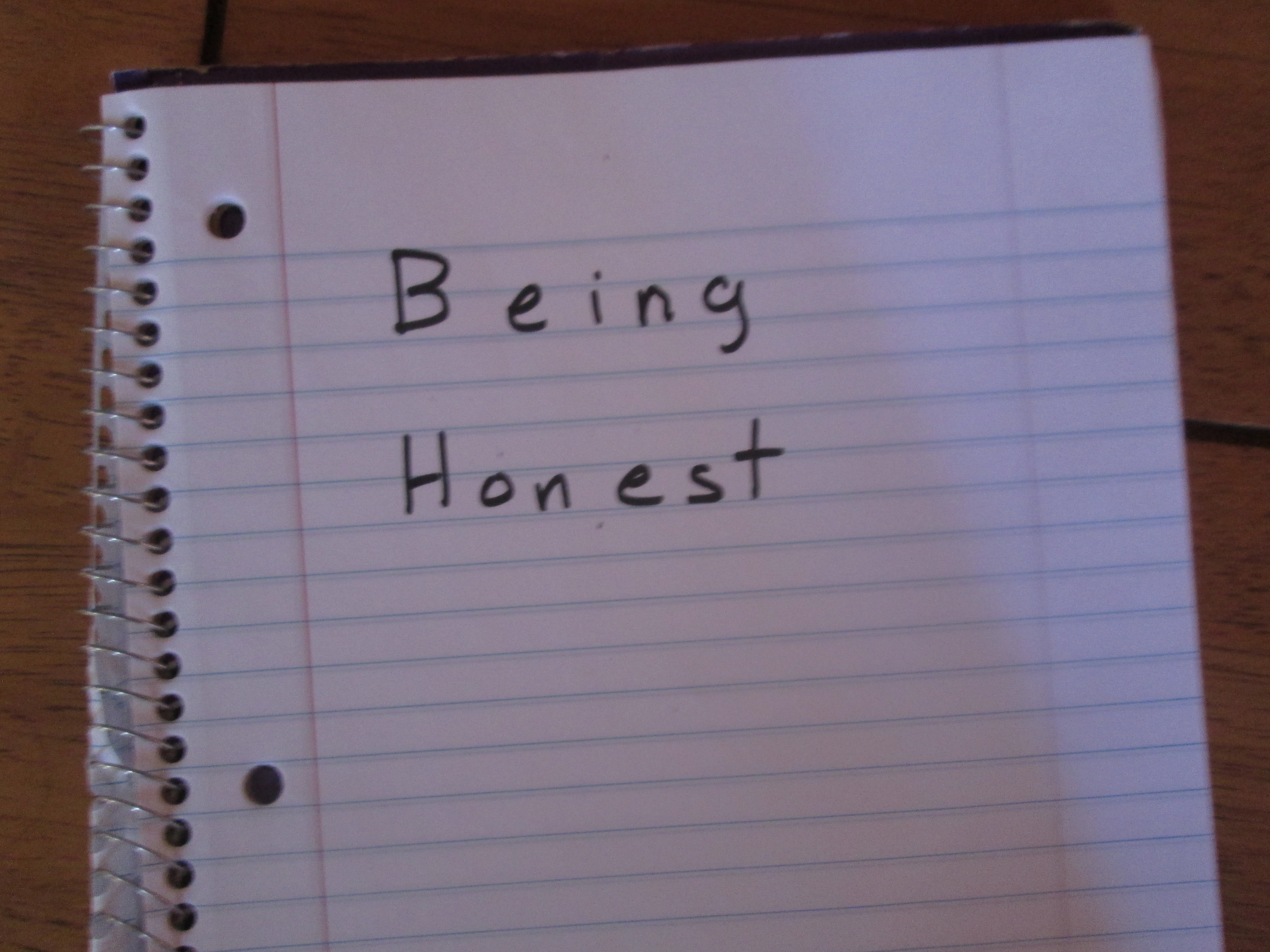
It Keeps You Honest With Yourself

Journal 004

This last point is really a combination of the two points listed above. But it is important to note that when we are not losing weight we expect, it is often due to the fact that we are deceiving ourselves. We lie to ourselves about what we have eaten and how much we have eaten.

The fact of the matter is most people who do not keep a food journal cannot recount with accuracy what they ate. To complicate the matter it’s easy for us to lie to ourselves about these issues. This becomes a big problem when a person is not getting the results they are expecting. Wondering what went wrong or what is going wrong becomes common.

A food journal  helps in keeping one from self delusion. After all, there is (or at least there should be) an objective record. This record keeps you honest.

In closing, there is only one question you need to ask yourself: Do you want to lose weight? If you do, then a food journal will tremendous help with your goal.