A new episode of A Mind For Fitness Podcast. In this episode, I talk about the difficulty of braking bad habits and creating new ones and what you can do about it. Enjoy!

A new episode of A Mind For Fitness Podcast. In this episode, I talk about the difficulty of braking bad habits and creating new ones and what you can do about it. Enjoy!

A while back, I wrote a post on eating with your stomach. In that post, I talked about the importance of paying attention to how full you are while you are eating to avoid over consumption.
The way you monitor how full you are is by eating slowly. However, when you eat slowly there is also an added benefit–tasting your food. In other words, not only are you able to monitor how full you are, you also get to enjoy your food.
People are often supersized by how quickly they get full when they eat slowly and pay attention to their stomach. Likewise, it is shocking what you actually taste when you eat with the intention of enjoying your food.
What is the reason for the shock? It is due to the fact that often food you think you like turns out to taste gross.
When we eat too fast, not only do we overeat, but often times we only get the rush of salt and/or sugar (and other flavors) over our tongues. Because of this, we often do not recognize it when we do not like something.
This hit home for me some years ago when I decided to eat slowly and enjoy my food. At the time I was following the Paul McKenna diet. I went to one of my favorite restaurant and ordered the stake fries. But instead of gobbling them down I attempted to enjoy every bite. I did not succeed in that attempt. They were horrible. As a result, I have not eaten them since.
On the flip side, there are now many foods that I now enjoy that I did not before. For example, baby carrots are very sweet. By slowing down and enjoying the flavor, eating these items is a great way to curb your sweet tooth.
In closing, I encourage the reader to try it for themselves. You will be supersized and what you do and do not like.
I have seen many people fail on diets for a verity of reasons. However, recently I have noticed an attitude or belief that I have not recognized in the past. Since I have noticed this belief, I have come to see it in many. I have even come to recognize that I have fell into this trap from time to time.
So what is this belief? It is simply this: That adhering to part of a diet should give an individual part of the results of that diet. In practical terms it looks something like this. A person starts a low-carb diet. After a few weeks he notices that he is not losing anything. However, upon review, he realizes that he is really only adhering to about half or three quarters of the diet. He thinks to himself (and here is where the poor belief system comes into play), “I should be losing something. I know I’m not following the diet perfectly but I am following about 75% of it. I should be losing something–shouldn’t I?” Can you relate to this story? I know I can.
To complicate things, perhaps you have seen a friend who needs to lose a some weight and got results by cutting back just a bit on their carb intake. The question, then, needs to be asked: Why does following part of diet work for some and not others? The answer to this lies in what kind of body style one has and how much one needs to lose.
For example, someone with a bean-pole body style who has only 20 pounds to lose can see great results from only following part of a diet. But, even a bean-pole who has 50 pounds to lose is going to have to do better than 50 or even 70% of a diet.
However, for those of us who put on weight easily and have more than 25 pounds to lose, we need to be super strict on the low-carb protocol particularly at the beginning. Why is this? Simply put, doing 50% or even 75% of a diet is not enough to reset your fat burning hormones.
The truth is you need 10 days to 2 weeks in order to down regulate your fat storing hormones and up regulate your fat burning ones. So, if you are strict for three days, but on that forth day you eat a meal that spikes your insulin levels, you are not going to lose weight. If you repeat this process for a few weeks, you might get discouraged.
Fixing this is a matter of being honest with yourself. Are you the type of a person who puts on weight easily? Do you have more than 20 pounds to lose? Are you just starting out on a low-carb diet? If any or all three of these are true, then you need to be as strict as possible. The results will be worth it?

A new episode of A Mind For Fitness Podcast is now available. In this podcast I review Chris Powell’s book Choose to Lose The Seven Day Carb Cycle Solution.
Also, I talk about my experience in a one on one Yoga class!
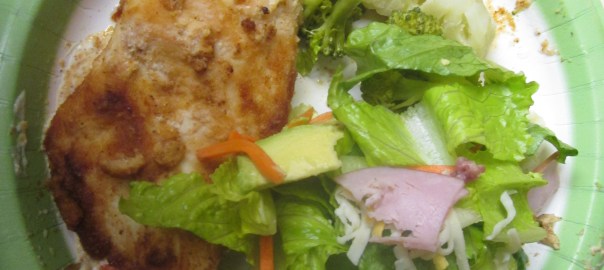
Most of us do not eat with a mindful stomach. In other words, we do not listen to our stomach when we consider how much food we are going to consume. But if we do not consult our stomach then what do we consult?
Often we eat with our eyes. By that, I mean the aesthetic appeal of food can entice us to eat even when we are not truly hungry.

Emotional eating is another factor. That is we eat to change our mood. Again, this often has very little to do with whether or not you are hungry.
Finally, there is eating out of habit. One of the biggest habits revolving around food is “meal time.” We are not eating because we are hungry, we are eating because its “meal time.” And to complicate things, most of us are trained to finish everything on our plates at these “meal times.”

None of these are eating because we are truly hungry. But the good news is eating with a mindful stomach is as easy as asking yourself, “Am I really hungry right now?” Or to put it another way, really listen to the organ that tells you when you are hungry–your stomach.
If you are hungry, then this is a great time to eat. But continue to consult your stomach. A great way to cut back on the amount of food you eat is a little trick I learned from Paul McKenna in his book, I Can Make You Thin. Here is the trick: Eat very slowly and enjoy your food. After each bite, consult your stomach. If you are still hungry take another bite. If you are not stop eating. Don’t worry not finishing your food because if you are truly hungry in five or ten minutes–eat again!
Do this and see how much you have been eating because of other reasons rather than hunger. And then watch the scale for the results!

Are you a total Gym D-bag? Find out the seven sins d-bags commit and why it annoys people on this episode of A Mind For Fitness

We all know naturally thin people. You know, the kind of person who can eat anything they want and it does not effect their weight in the slightest. I have had many friends like this. While I was trying my hardest to lose weight by staying away from high-carb food, thinner friends would gorge themselves on things like pizza and ice cream.
However, there is some bad news for naturally thin people. While they may not be gaining weight form eating high-carb food, they are still damaging their bodies. Or to put another way: Carbs are not good for skinny people either.
The truth is being overweight is just one sign that you are unhealthy. Skinny people who eat poorly can and more than likely will still suffer from things like high blood pressure, stroke, diabetes, and a whole host of other problems.
Also, later in life, naturally thin people will get fatter. They may never look like those people you see on weight loss TV shows. However, we have all run into thin people with a big pot belly. How did that happen? Too many carbs.
In summary, eating a low-carb diet is not just for overweight people. Healthy eating is for everyone. If you are a naturally thin person, do not fool yourself into thinking you can eat whatever you want. All those carbs will catch up to you eventually.
In this episode of A Mind For Fitness Podcast, I take on the issue of which is better, the home gym or a traditional gym. Also, when is it right to snack and more.
Recently, a friend of mine asked my advice on picking out some healthy snacks. This question caused me to contemplate whether snacking was good or bad in general. I have come to these three conclusions. Hope this helps you make great decisions for your health.
Snacking is OK when a person firsts starts a low-carb diet.
It is a major improvement when someone stops eating the standard American diet. Generally, those first 20 to 50 pounds come off quite quickly. Because of this, snacking is for the most part fine. Just as long as they do not exceed 35 carbs a day.
Another good reason for snacking during this time is to avoid starvation mode. This is when a person restricts their nutritional intake too dramatically. As a result, the body holds onto fat reserves rather than releasing them. Snacking is a great way to avoid this state.
You may need to stop snacking if you have hit a plateau.
Everyone who is trying to lose a significant amount of weight will eventually plateau. There are many things that you can do to re-start your metabolism. One of those things is to stop snacking.
Please do not misunderstand me at this point. A person should still eat if they are hungry. If you are hungry between meals and desire a snack, then by all means eat something. However, you should only eat when you are hungry. Or to put it another way, if you are not hungry do not eat. Even low-carb snacks are not good during this process.
As a side note, if you feel compelled to eat when you are not hungry, this is a good time to find out why. For many, eating when one is not hungry is a way to fill a void in ones life. Personally speaking, I use to snack because I was bored. It was not food that I needed but excitement. Next time you are tempted to eat when you are not hungry, ask your self, “what void am I trying to fill”?
Snacking can be OK if you are in maintenance.
If you have already reached your goal weight, snacking can be fine. Just as long as you carefully monitor your weight. It would be a sad event if you gained back the weight you worked so hard to lose. But generally speaking, after you have reached your weight loss goals, you have much more liberty to eat when you want. This is due to the fact that your body is now a fat burning machine.
A new episode of A Mind For Fitness Podcast is now available. In this episode I talk about the dangers of being blinded by diet dogmas. Enjoy!
<enclosure url=”http://traffic.libsyn.com/amindforfitness/AMFFep19c.mp3″ length=”29197073″ type=”audio/mpeg” />

 Advanced Weight Loss Resources